

I was going through some old pics today and came across one of a couple of storm troopers,and I thought it would be fun to make a composite of them so I did. If you would like to know how to do a composite in Photo Shop click here.
I was going through some old pics today and came across one of a couple of storm troopers,and I thought it would be fun to make a composite of them so I did. If you would like to know how to do a composite in Photo Shop click here.


This past weekend I had the opportunity to go and shoot with a fellow photographer Brett May. We shoot a couple of bikes and a 4×4 at Freedom Power Sports , it was a lot of fun and a great day for shooting.

I think it is important to keep your skills sharp and every now and then shoot for yourself. Thats what I did this past week when I shot pictures of Brittany Roy
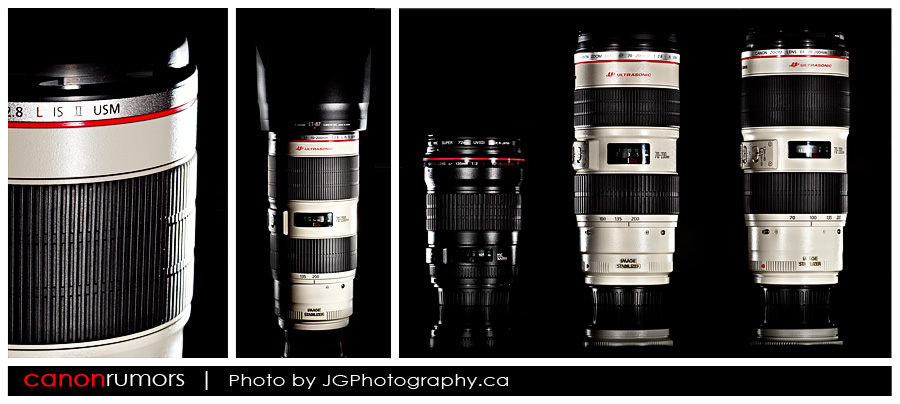
Picking up this lens, you know that it is a professional lens. The construction is solid, with all of the rings tight and rotating smoothly and predictably. Important for outdoor photographers is that this lens is fully weather sealed (when used with a 1D camera body). The lens is based around a metal lens barrel and all of the buttons are nicely recessed to prevent snagging (however throughout the wedding I did find several times when some of the lens buttons have been accidentally pushed into another position, just as with the original). The front filter tread is 77mm, which makes for expensive filters, but it is also a common size amongst L lenses so you can swap some filters between lenses if needed.Probably the biggest downside to this lens is its size (about 8 inches long without the lens hood) and weight ( about 1.5 kg). Aside from the fact that this big white lens with the red ring has been known to provoke at least entry-level lens-envy, with this lens mated to a 1D body, the weight is not insignificant for a 12 hour wedding. Compared to the original, the new version is 20 grams heavier.As you can see in the top picture with the old version in the middle and the new version to the right, the new version can be distinguished by a slightly larger front focusing ring, but otherwise the lenses themselves are almost visually identical. However, the new version of the lens comes with a newly improved lenshood. It includes a push-button lock and release mechanism so it won’t accidentally fall off, and the finish on the lenshood has a different finish that resists small marks much better than that of the original. To read more about this lens click here and to buy it click here

Time magazine featured legendary photographer Bruce Davidson work. Davidson was drafted into the US Army, where he served in the Signal Corps at Fort Huachuca, Arizona, attached to the post’s photo pool. Initially, he was given routine photo assignments. Undaunted, Davidson created out of seemingly mundane material unique photo studies. An editor of the post’s newspaper, recognizing his unique talents, asked that he be permanently assigned to the post newspaper. There, given a certain degree of autonomy, he was allowed to further hone his talents. Later, stationed in Paris, he met Henri Cartier-Bresson, a later colleague with the Magnum photo agency, sharing his portfolio and receiving advice from Cartier-Bresson. While in France, Davidson produced a photo essay on the Widow of Montmartre, an old Parisian woman.After his military service, in 1957, Bruce Davidson worked briefly as a freelance photographer, before joining Magnum the following year. During the following few years, he photographed extensively, most notably producing Brooklyn Gang and The Dwarf. From 1961 to 1965, Davidson produced one of his most famous bodies of work as he chronicled the events and effects of the Civil Rights Movement around the country, in both the North and the South. In support of his project, Davidson received a Guggenheim Fellowship in 1962, and his finished project was displayed at the Museum of Modern Art in New York. Upon the completion of his documentation of the Civil Rights Movement, Davidson received the first ever photography grant from the National Endowment for the Arts.
Just as photographic film was mostly replaced by silicon image chips, now quantum film threats to replace the conventional CMOS image sensors in digital cameras. Made from materials similar to conventional film—a polymer with embedded particles—instead of silver grains like photographic film the embedded particles are quantum dots. Quantum films can image scenes with more pixel resolution, according to their inventors, InVisage Inc., offering four-times better sensitivity for ultra-high resolution sensors that are cheaper to manufacture.
Read More: EETimes

Anyone who owns a Iphone or an Ipod touch knows that there are several of photography apps out there however not all of them are that good . Hipstamatic is an app that is worth checking out. If you like the vintage look of a Holga camera you’ll love this.

In the Version 2.0.4 firmware, the following phenomena that occurred with the Version 2.0.3 firmware (which was to enhance the movie functions) have been corrected.There was a phenomenon in which the manual recording settings made in C1/C2/C3 were changed and sound could not be recorded if manual sound recording was used in the C1/C2/C3 settings and the camera was subsequently turned off (or if Auto Power Off was activated). This does not occur in modes other than C1/C2/C3.The Version 2.0.4 firmware includes the movie function enhancements listed in items 1 through 5 below, and also incorporates the correction listed in item 6.Adds or changes the following movie frame rates.
NTSC:
1920×1080 : 30 fps (changed – actual 29.97 fps)
1920×1080 : 24 fps (added – actual 23.976 fps)
640×480 : 30 fps (changed – actual 29.97 fps)
PAL:
1920×1080 : 25 fps (added – actual 25.0 fps)1920×1080 : 24 fps (added – actual 23.976 fps)640×480 : 25 fps (added – actual 25.0 fps)Adds a function for manually adjusting the sound recording level (64 levels).Adds a histogram display (brightness or RGB) for shooting movies in manual exposure.Adds shutter-priority AE mode (Tv) and aperture-priority AE (Av) mode to the exposure modes for shooting movies.Changes the audio sampling frequency from 44.1 KHz to 48 KHz.Fixes a phenomenon where communication between the camera and the attached lens is sometimes interrupted after manual sensor cleaning. (This phenomenon only affects units with Firmware Version 1.2.4.)
Download: http://web.canon.jp/imaging/eosd/firm-e/eos5dmk2/firmware.html
Alternate Download:Windows: Mac|http://www.canonrumors.com/files/5dfirmware/eos5d2204.exe: Windowshttp://www.canonrumors.com/files/5dfirmware/eos5d2204.dmgMacOS

This quarter is over and I fell that it was a fun and exciting quarter, when we come back from brake we will be shooting architecture with the 4×5 camera I am nervous and excited at the same time about shooting this but for now I think i will try to enjoy the brake.
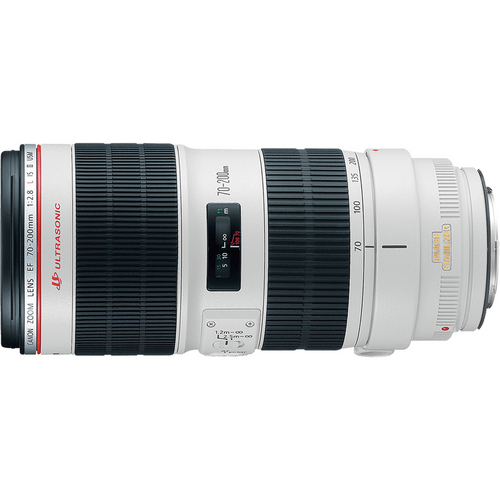
Canons new 70-200 2.8 is available at B and H Photo . This lens is an improvement on the previous one meaning it has updated weather sealing quieter and faster auto focus and a new IS which allows you to pan up and down as well as left to right.
 Cooper Ricketts Photography Blog
